Troubleshooting

Garage door won't close: causes, fixes and Miami repair

Nine times out of ten it is the photo-eye sensors, and the tell is a blinking opener light. A five-minute fix most homeowners can do themselves.

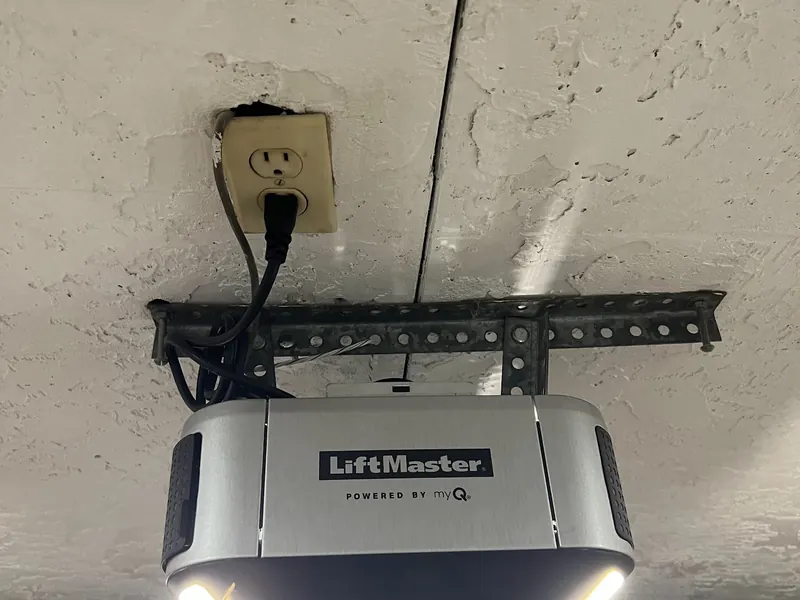
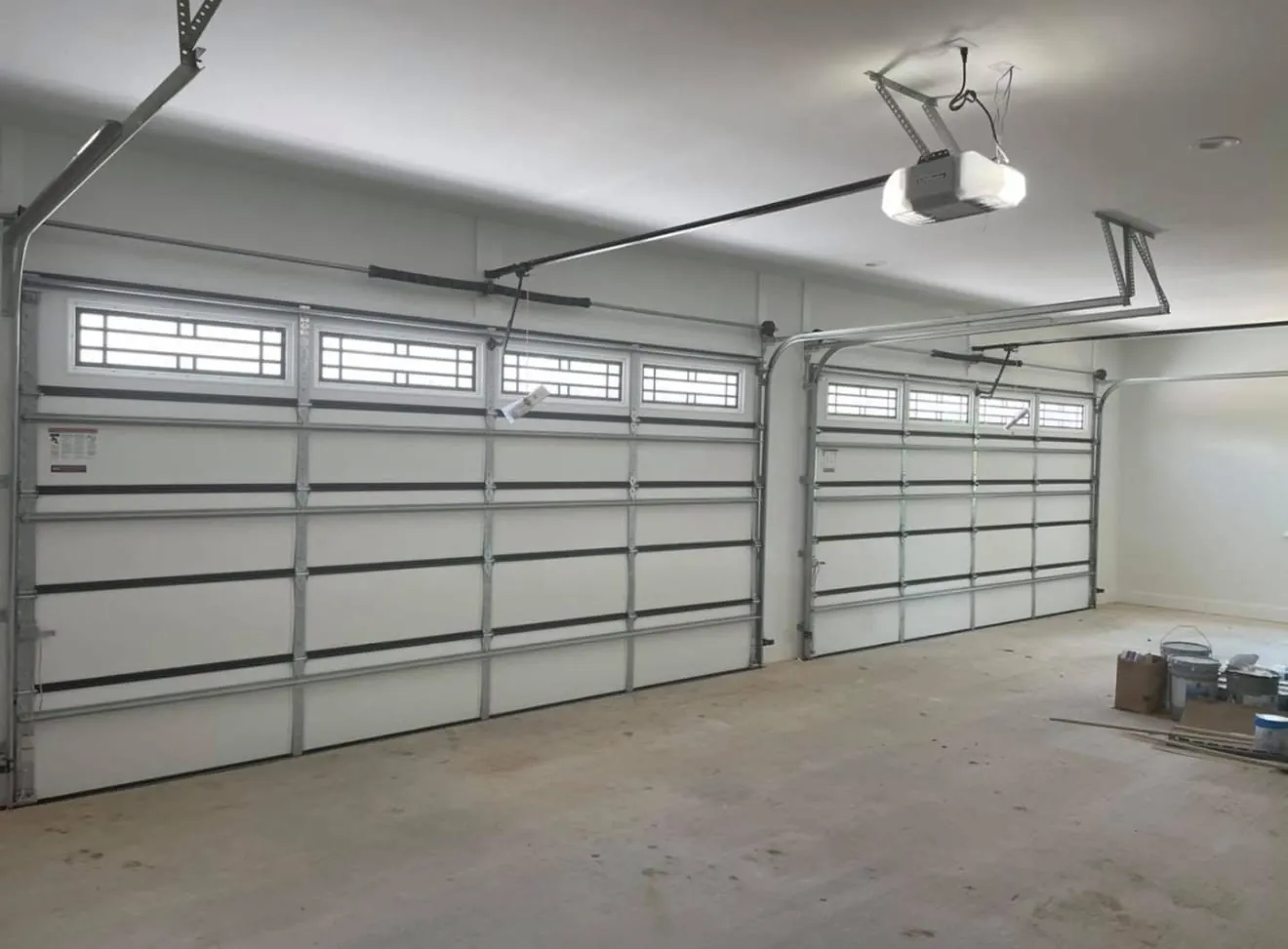
A newly installed ceiling mounted garage door opener with its rail running down to a white sectional door in a double bay garage
If the door is stuck open, your home is unsecured. Call (786) 315-9238 for same-day service.
Licensed & insuredLicense 26BS00015, residential and commercial
20 years’ experienceCompany founded 2021, trade experience long before
Hurricane code compliantDoors approved for the Miami-Dade HVHZ
Diagnosis

What's actually causing it

Work down the list. The tells are what separate one cause from another.

Where the photo-eye safety sensors sit in a garage door opening Looking at the opening from inside. A sensor is mounted on each vertical track about six inches above the floor, and an invisible infrared beam runs between them across the doorway. If anything breaks that beam, or if the two sensors are not pointed at each other, the door will not close. Infrared beam Sensor Sensor About 6 in
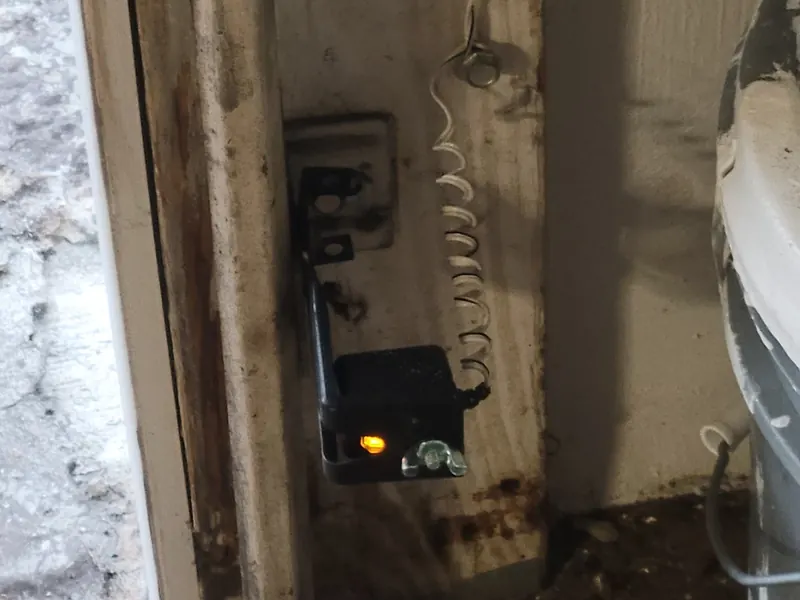
The photo eyes, seen from inside the garage. One sits on each side of the opening about six inches off the floor, and the beam between them has to be unbroken and dead straight for the door to close.

Photo-eye sensors misaligned or blocked

You can check this
How you know
The opener light blinks 5 or 10 times when you press close. One sensor LED is off or flickering. Something is parked in the beam.
The fix
Clear the beam, wipe both lenses, and nudge the brackets until both LEDs are solid.
Dirty sensor lenses

You can check this
How you know
Both LEDs lit but weak or flickering. Common in a dusty Florida garage.
The fix
Wipe both lenses with a dry cloth.

Close-limit set wrong

Technician job
How you know
The door closes fully, touches down, then immediately reverses and goes back up. Sensors are fine.
The fix
Adjust the down-limit screw on the motor unit. A small adjustment, easy to overshoot.

Obstruction or debris in the track

You can check this
How you know
The door stops at the same point every time. Look for a bolt, a stone, or a bent section of track.
The fix
Clear it, or straighten the track if it is bent.

Binding or seized roller

Technician job
How you know
The door judders on the way down and stops. Rollers no longer spin freely in the track.
The fix
Roller replacement, as a full set.

Down-force setting too low

Technician job
How you know
The door reverses partway with no obstruction and no sensor fault. Often after a temperature swing.
The fix
Force adjustment on the opener. This is a safety setting, worth having set correctly rather than cranked up.
Before you call

Safe things to check yourself

Any of these could save you a service call, and none of them will hurt you or the door.

  1. Look at the two small sensors near the floor on either side of the door. Both LEDs should be solid, not blinking.
  2. Clear anything in the beam: a bin, a bike, a coiled hose.
  3. Wipe both lenses with a dry cloth. Dust alone is enough to break the beam.
  4. Gently nudge one bracket until both LEDs go solid, then tighten.
  5. Count the blinks on the opener light. Most manufacturers use a blink code that identifies the fault.
  6. Check the track at the point the door stops for a bolt, stone or dent.
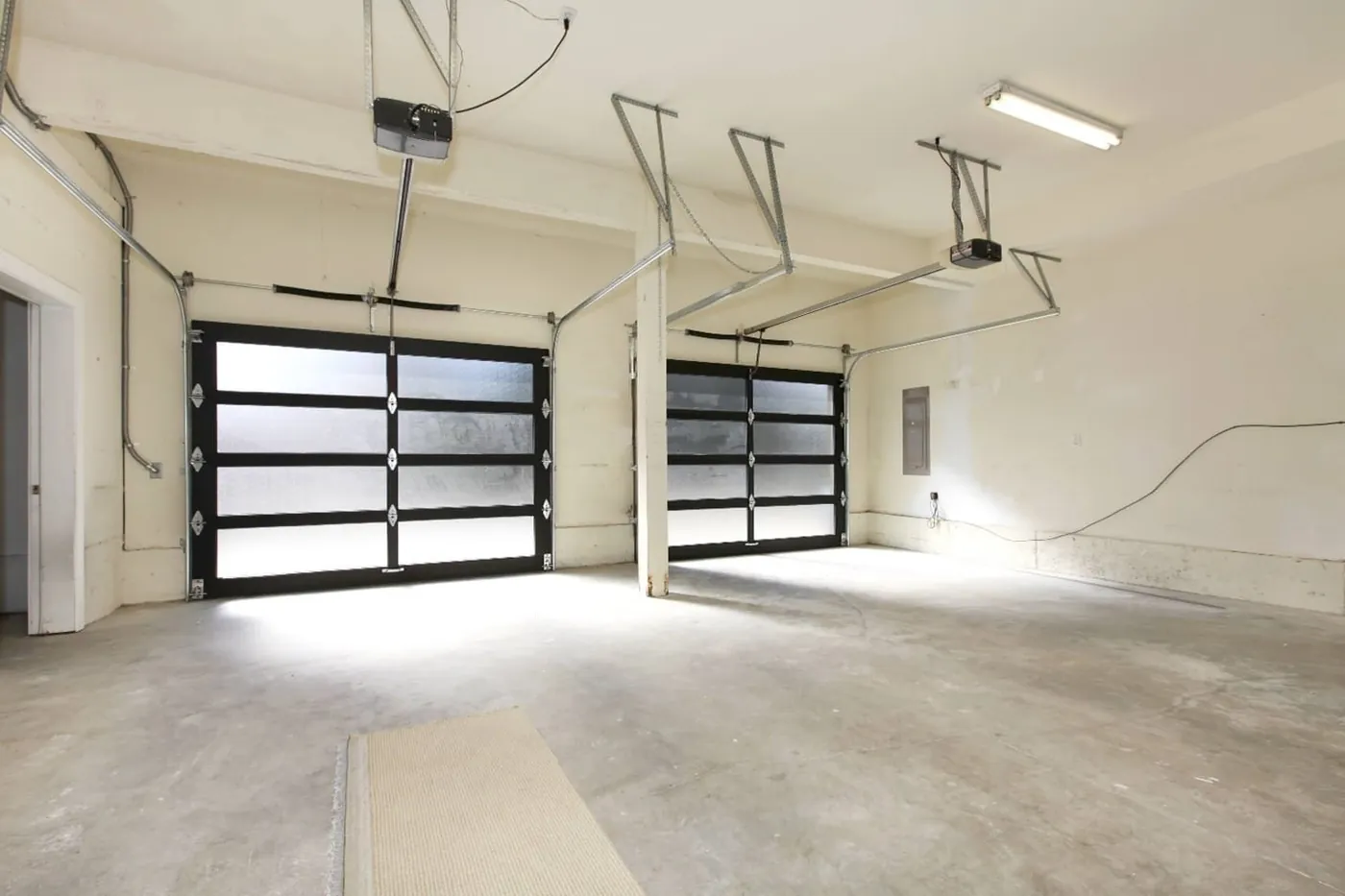
Interior view of newly installed white residential garage doors
When we come out

What a service call looks like

We diagnose on site, tell you what failed and why, and give you a written price before touching anything. If it turns out to be something you could have fixed in five minutes, we will say so.

Our trucks carry springs, cables, rollers, hinges and common opener parts, so most repairs finish in a single visit rather than needing a return trip.

FAQ

Frequently asked questions

Why does my garage door close then immediately open again?

Two likely causes. If the opener light blinks, the photo-eye safety sensors are misaligned or blocked. If the sensors are fine and the door touches down before reversing, the close-limit is set slightly too low, so the opener thinks it has hit an obstruction. The limit is adjustable but easy to overshoot, so it is worth having set properly.

Where are the garage door safety sensors?

Near the floor on both sides of the opening, usually four to six inches up the track, pointing at each other. Each has a small LED. Both should be solid when the door is working.

Can I just disconnect the safety sensors?

No. They are the only thing that reverses the door if something is underneath it, and they are required by federal law on every opener sold since 1993. If they keep tripping, the cause needs fixing.

Why won't my garage door close in the rain?

Moisture on the sensor lenses, or a sensor bracket that has shifted. Water and the low winter sun angle both scatter the beam. Wipe the lenses and check both LEDs are solid.

How much does it cost to fix a door that won't close?

Sensor realignment is often a quick fix and we will tell you if it is something you can do yourself. If it turns out to be rollers, our published guide puts a full set at $349; opener repair is quoted after diagnosis. The estimate is free.

Why is my garage door not closing all the way?

A door that stops short of the floor is usually the close-limit setting telling the opener the floor is higher than it really is, or a bent track or seized roller adding resistance partway down. A door that touches down and then pops back open is the opposite problem: the limit set too deep, so the opener reads the floor as an obstruction. Either way it is an adjustment rather than a part, and one of the cheaper calls we run.

Should both garage door sensor lights be green?

No, and this is the most misread thing on a garage door. The two eyes are not the same part. One sends the infrared beam and one receives it, and they use different colored LEDs on purpose so you can tell them apart. On a LiftMaster or Chamberlain the sending eye is amber and the receiving eye is green. On a Genie the sender is red and the receiver is green. Either way you should see one of each, and both should be burning steady. The one to watch is the green one: if it flickers or goes out, the beam is broken or the eyes are out of line.

Which garage door sensor is the receiver?

The one with the green LED. On a LiftMaster the other eye, the sender, shows amber. It makes no electrical difference which side of the opening each one goes on, and that is useful, because the receiver is the one sunlight interferes with. Direct sun into the receiving lens washes out the beam and the door refuses to close, which is why a door that only misbehaves in the late afternoon is so common here. LiftMaster's own fix is to swap the two eyes over so the receiver faces away from the sun. Same wiring, same brackets, five minutes.

How do garage door safety sensors work?

There is a diagram of the layout further up this page. One eye sits about six inches off the floor on each side of the opening, wired back to the motor unit. The sender projects an invisible infrared beam straight across the doorway and the receiver watches for it. The opener will only run the door down while that beam is unbroken, and if anything crosses it mid close the door stops and reverses. They have been required by federal law on every opener sold in the United States since 1993. The detail that confuses people is that the sensors only affect closing. A door with a sensor fault still opens perfectly, which is exactly why the fault does not look like a sensor fault.

Are garage door sensors universal?

Not across brands. LiftMaster and Chamberlain eyes are interchangeable with each other, because the same company builds both, and they generally work back through several generations of those openers. A Genie needs Genie Safe-T-Beam sensors. The pulse pattern the sender uses is what the receiver and the motor unit are listening for, so mixing brands fails even when the wiring fits. Replace them as a matched pair rather than one at a time, and take the model number off the motor unit label before buying anything.

Our work

Jobs like this one

Our own work across Miami-Dade, Broward and Monroe County.

Range

Models and collections we install

The doors, finishes and hardware we fit across South Florida.

What the work involves

How the job is actually done

What a proper installation and service visit actually involves, step by step.

Want it looked at today?

Same-day service across Miami-Dade, Broward and Monroe County, seven days a week. Free estimates, upfront pricing.

Call Now Free Estimate