Headroom, in plain words

Garage Door Lift Types

A garage door can open four ways. Which one yours needs comes down to the space above the opening and what is on the ceiling.

Standard, low headroom, high lift and vertical lift, each drawn from the side so you can see where the door goes when it opens. Every one of them is something we measure for and fit, on houses and on commercial bays.

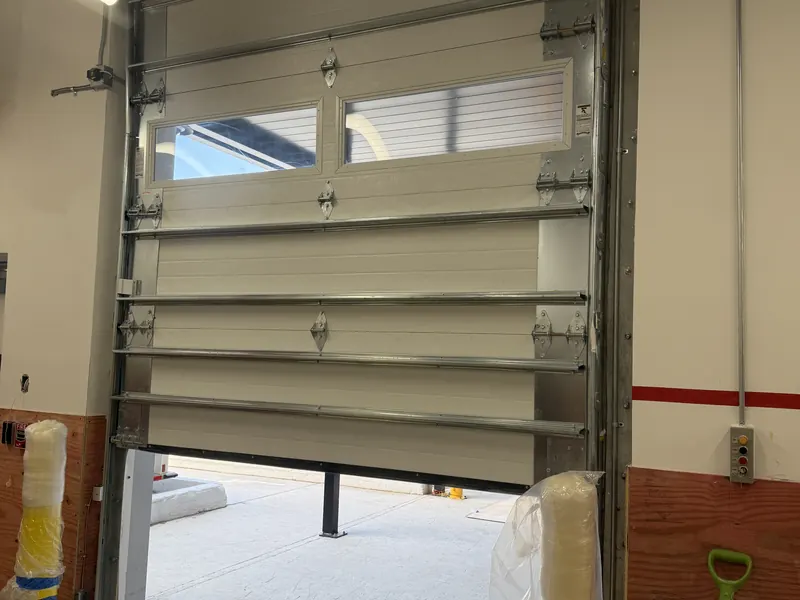
High lift track on a commercial sectional door
Licensed & insuredLicense 26BS00015, residential and commercial
20 years’ experienceCompany founded 2021, trade experience long before
Hurricane code compliantDoors approved for the Miami-Dade HVHZ
At a glance

The four lift types side by side

Tap a drawing to jump to it. The cyan mark is the top of the door travelling along its track.

Headroom and depth for each lift type
Lift typeSpace above the doorDepth into the garageUsual fit
Standard liftAbout 12 inches above the doorDoor height plus about 18 inches into the garageMost homes
Low headroomAs little as 4 to 6 inchesAbout the same as a standard liftBeams, ducts, low ceilings
High liftThe extra lift plus about 12 to 18 inchesLess than standard, because more of the door stays on the wallTall ceilings, car lifts
Vertical liftAbout the door height again, plus 1 to 2 feetAlmost none: nothing runs along the ceilingWarehouses, docks
Standard lift, seen from the sideThe door rises up the opening, turns through a curved piece of track right at the top, and parks flat under the ceiling. It is the simplest layout and the one almost every house in South Florida was built for. Headroom
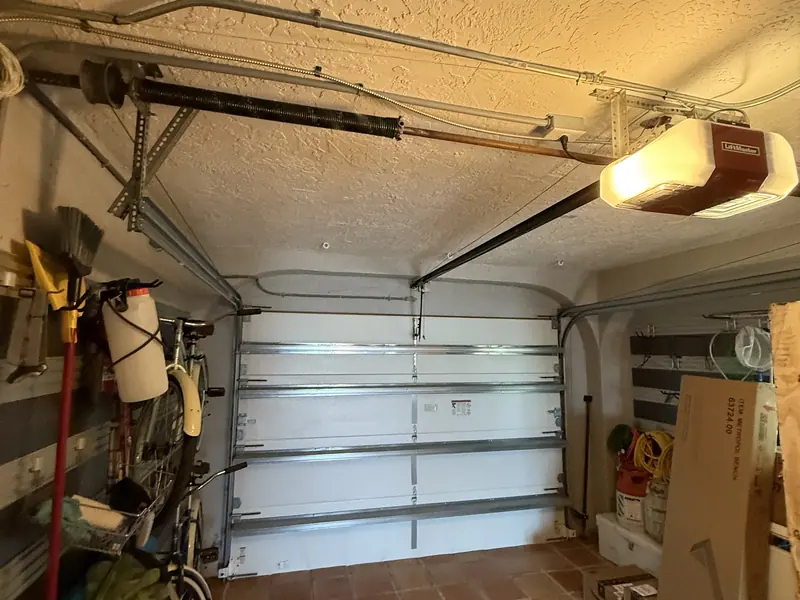
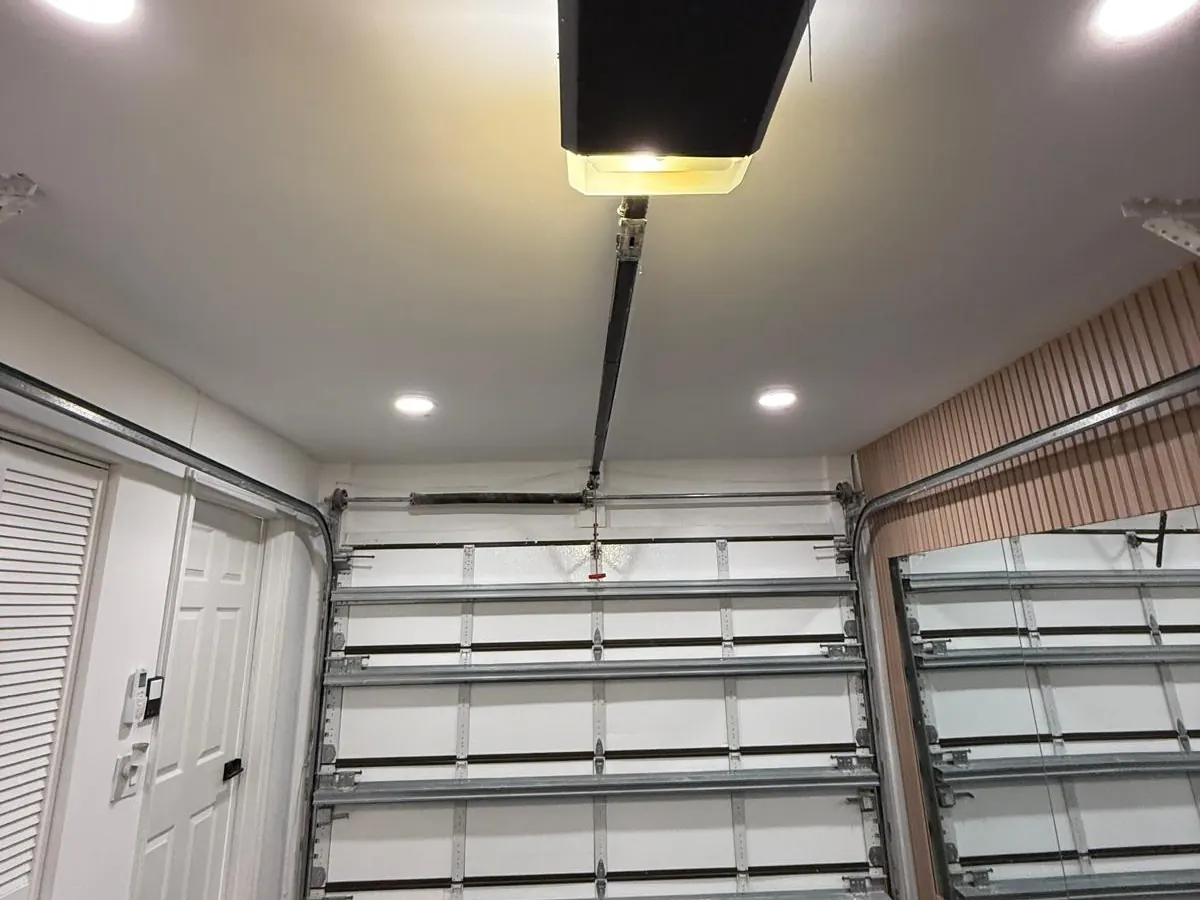
A newly installed ceiling mounted garage door opener with its rail running down to a white sectional door in a double bay garage
A standard lift on one of our jobs: the track turns at the top of the opening and runs back under the ceiling, with the opener rail in the middle.
Most homes

Standard lift

The door rises up the opening, turns through a curved piece of track right at the top, and parks flat under the ceiling. It is the simplest layout and the one almost every house in South Florida was built for.

  • Space above the door: About 12 inches above the door
  • Depth into the garage: Door height plus about 18 inches into the garage

When it is used

Use it whenever there is a foot or so of clear wall above the door and nothing in the way along the ceiling. It takes a normal ceiling mounted opener.
Price a standard lift door

Low headroom, seen from the sideA double track or a rear mounted spring lets the door turn almost as soon as it clears the header, so it squeezes under a beam, a duct or a low ceiling that a standard track would hit. Headroom
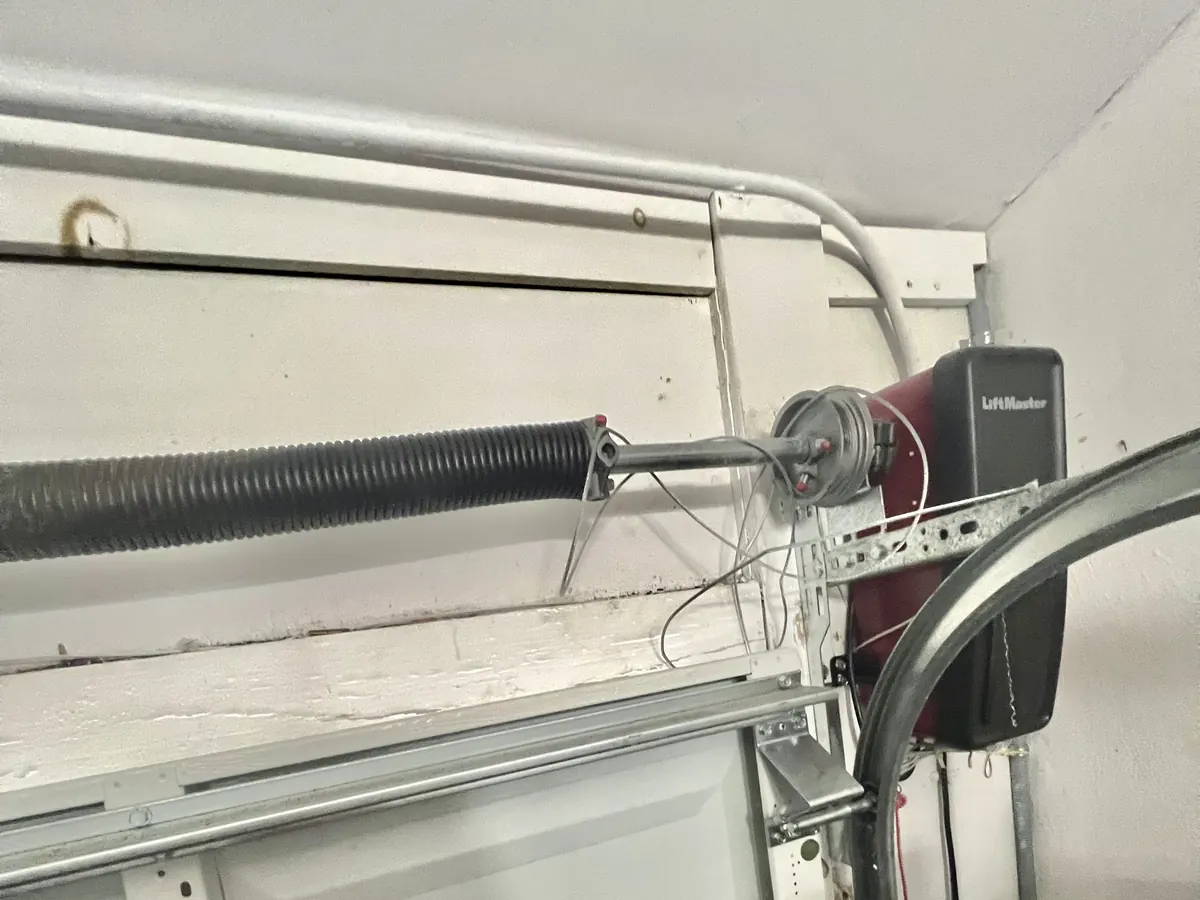
A LiftMaster wall-mounted opener installed beside the torsion spring and cable drum of a garage door
A wall mount opener beside the spring shaft on one of our jobs. Nothing hangs from the ceiling, which is why it is the usual partner for a low headroom door.
Beams, ducts, low ceilings

Low headroom

A double track or a rear mounted spring lets the door turn almost as soon as it clears the header, so it squeezes under a beam, a duct or a low ceiling that a standard track would hit.

  • Space above the door: As little as 4 to 6 inches
  • Depth into the garage: About the same as a standard lift

When it is used

Older homes, converted garages and condo garages where the space above the door is tight. A ceiling rail opener usually will not fit, so it pairs with a wall mount opener beside the door.

Price a low headroom door

High lift, seen from the sideThe vertical track keeps going up the wall past the top of the opening before it turns, so the door parks high, close to a tall ceiling, and leaves the space under it free. Headroom
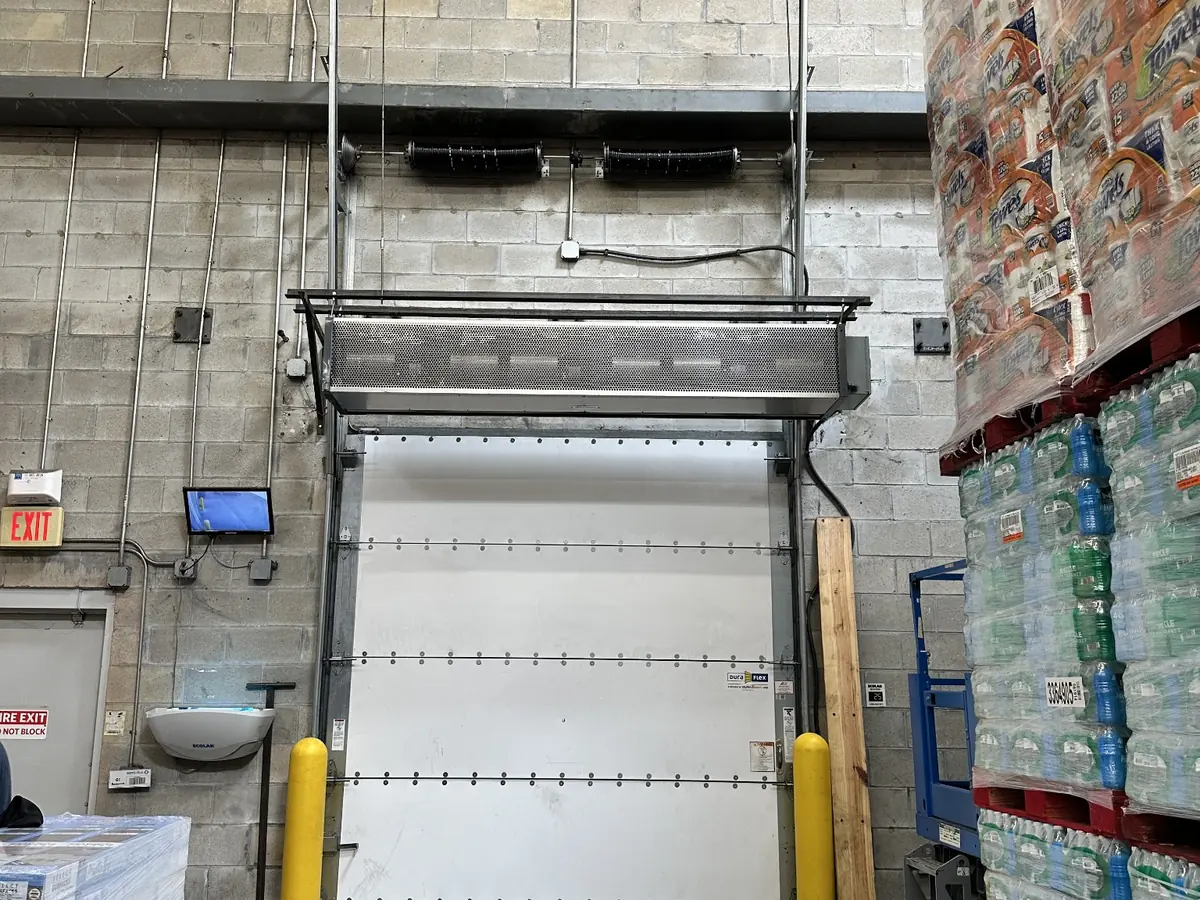
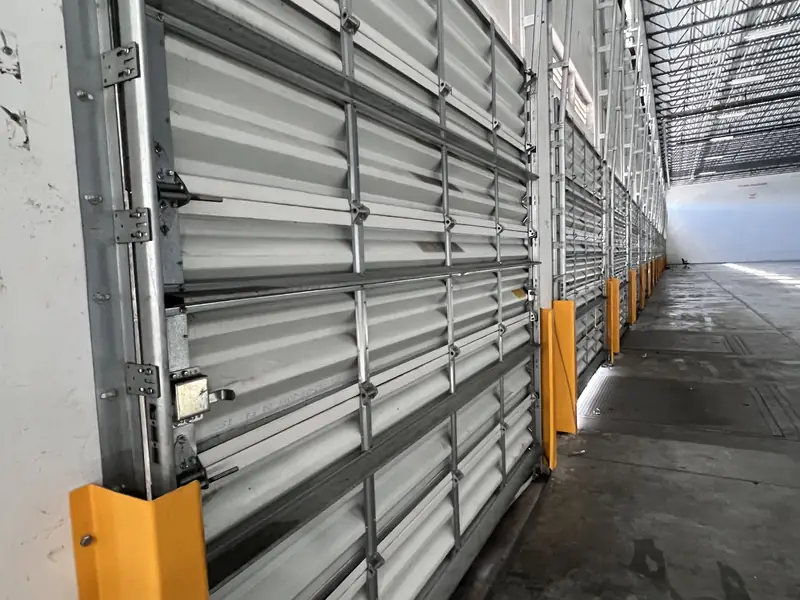
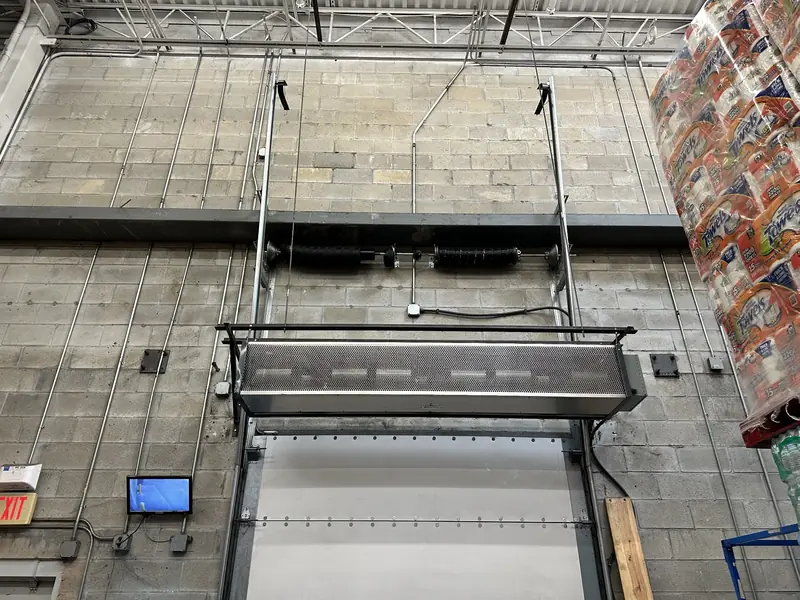
High lift track commercial door at a warehouse dock
Track carried far up the wall above a dock door on one of our commercial jobs, the layout high lift and vertical lift doors use.
Tall ceilings, car lifts

High lift

The vertical track keeps going up the wall past the top of the opening before it turns, so the door parks high, close to a tall ceiling, and leaves the space under it free.

  • Space above the door: The extra lift plus about 12 to 18 inches
  • Depth into the garage: Less than standard, because more of the door stays on the wall

When it is used

Garages with tall ceilings, a car lift or storage racks, and commercial bays with lights, sprinklers or a crane in the way. It is usually run by a wall mount or jackshaft opener.

Price a high lift door

Vertical lift, seen from the sideThe door never turns. It slides straight up the wall and stands above the opening, so the ceiling stays completely clear. Headroom
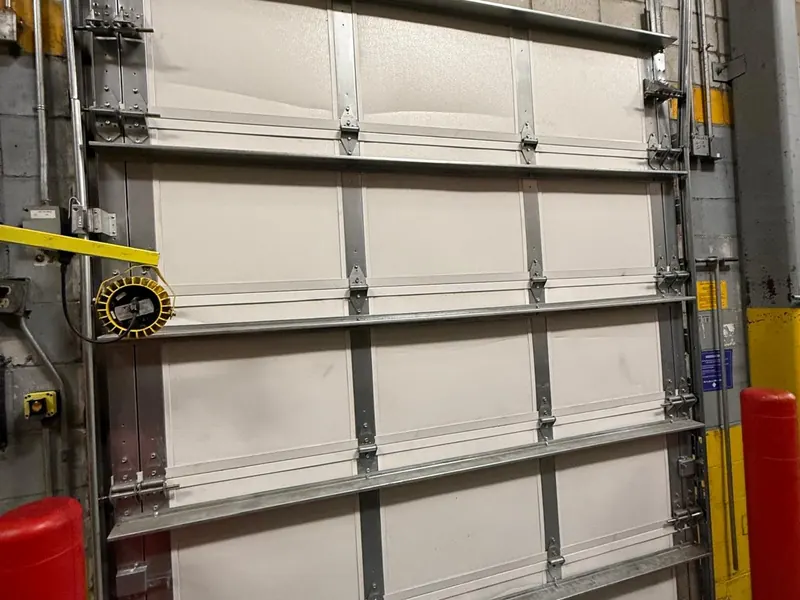
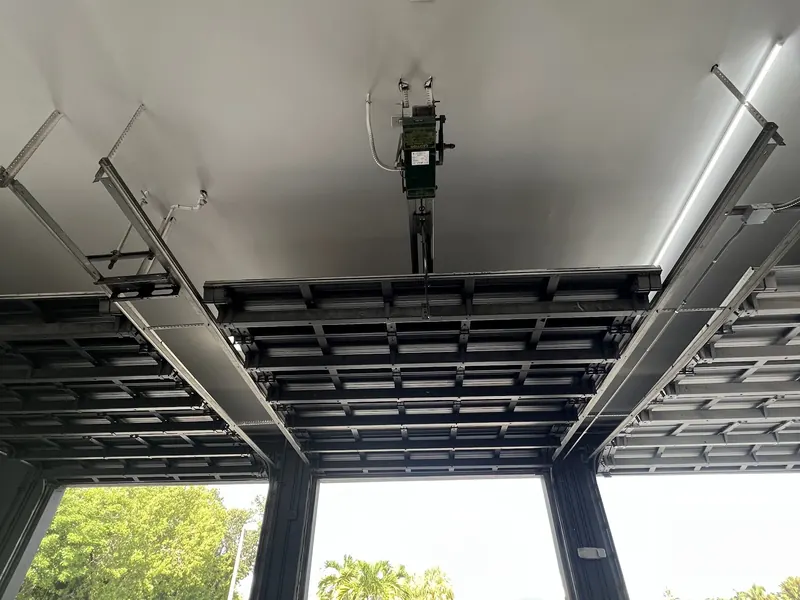
A white insulated sectional door in a retail stockroom with a jackshaft operator mounted beside the opening
Track run straight up the wall and the springs mounted high above a stockroom door on one of our commercial jobs: the wall space a vertical or high lift door needs.
Warehouses, docks

Vertical lift

The door never turns. It slides straight up the wall and stands above the opening, so the ceiling stays completely clear.

  • Space above the door: About the door height again, plus 1 to 2 feet
  • Depth into the garage: Almost none: nothing runs along the ceiling

When it is used

Warehouses, loading docks and high bays where the ceiling is taken by racking, cranes or lights, and the wall above the door is at least as tall as the door. It needs heavier springs and a jackshaft operator.

Price a vertical lift door

How we tell

What we measure on the free visit

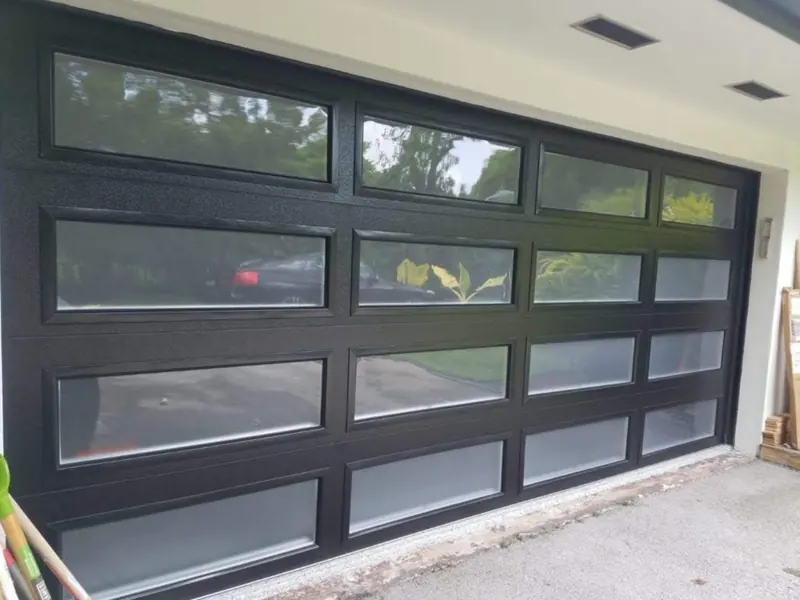
Full view glass double garage door with a black aluminum frame
  1. Headroom. From the top of the opening to the ceiling, or to the lowest beam, duct, light or pipe in the door's path.
  2. Side room. The wall beside each side of the opening, where the vertical track and a wall mount opener go.
  3. Back room. How far into the garage the door and the opener rail will reach, and whether a car lift, racking or storage sits in that space.
  4. The ceiling itself. What the track can hang from, and whether sprinklers, lights or a crane need to stay clear.

Not sure which one you have or need? Pick "Not sure" when you ask for a price and we will tell you on site. Rolling doors are a separate case: they coil above the opening instead of running along the ceiling. See rolling doors.

Our work

Track and openers on our jobs

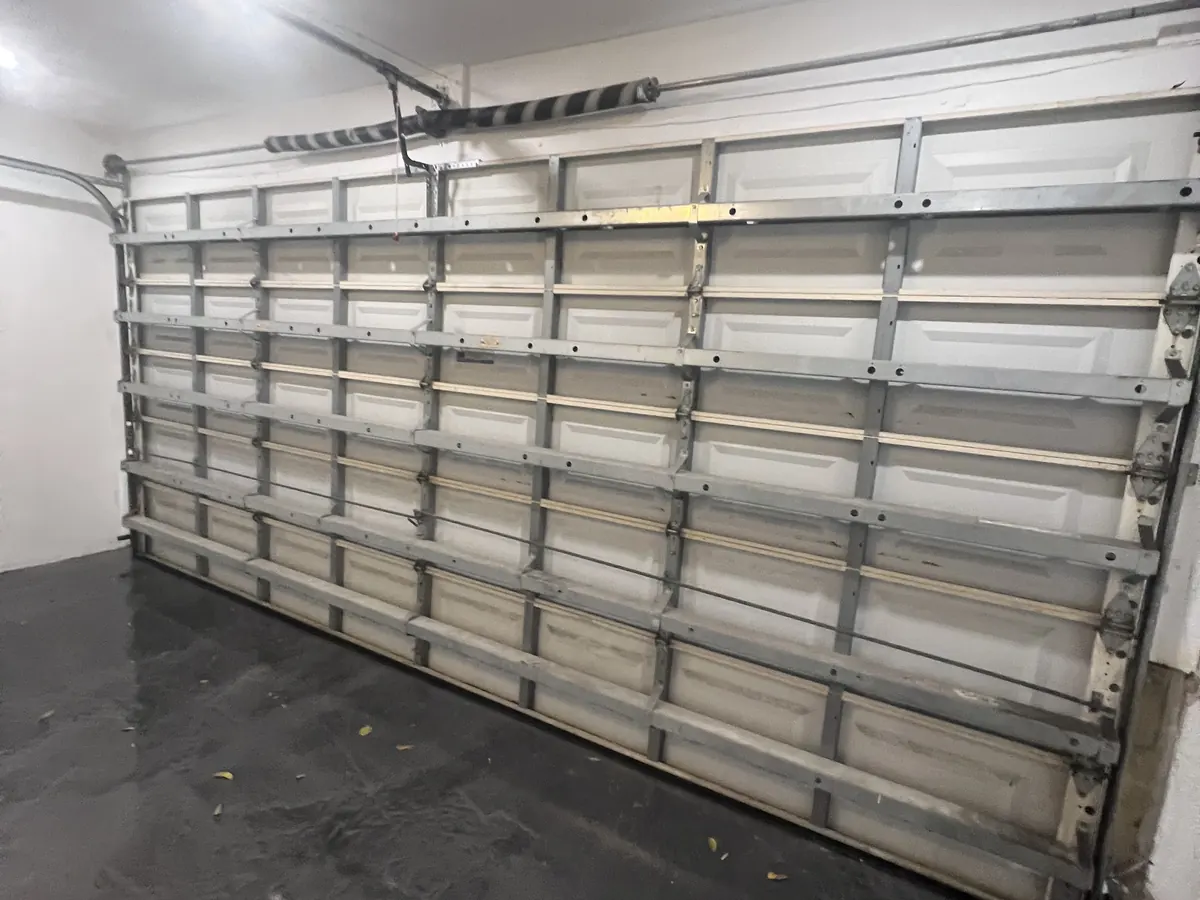
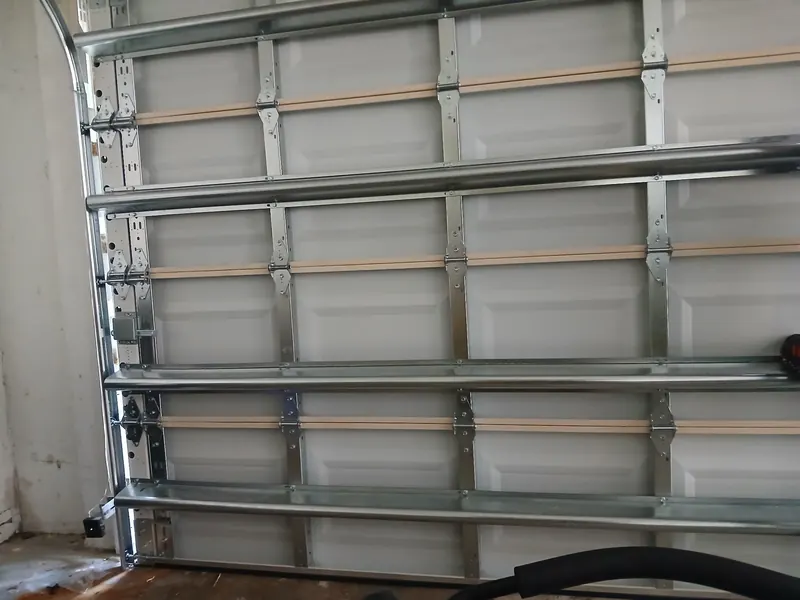
Doors we have fitted, seen from inside, where the track, springs and opener show how each one lifts.

See more of our work

FAQ

Frequently asked questions

How much headroom do I need for a garage door?

For a standard lift, about 12 inches of clear wall between the top of the opening and the ceiling or the lowest thing hanging from it. With less than that a low headroom kit can work in as little as 4 to 6 inches. We measure it on the free visit, because a beam, a light or a duct a few inches back from the wall counts as much as the ceiling does.

What is the difference between high lift and vertical lift?

A high lift door runs up the wall past the opening and then turns and parks under the ceiling. A vertical lift door never turns: it slides straight up and stands above the opening, so it needs wall above the door at least as tall as the door itself.

Can I put a normal garage door opener on a low headroom door?

Usually not a ceiling rail opener, because there is no room above the door for the rail. A wall mount opener that sits beside the door on the spring shaft is the usual answer, and it frees the ceiling as well.

Can an existing door be converted to high lift?

Often, yes. It takes new track, a different drum and usually different springs, and the opener changes to a wall mount or jackshaft type. Whether it is worth it depends on the door and the ceiling, so we look at both before quoting.

Do rolling doors need headroom?

A rolling steel door coils into a drum above the opening instead of running back along the ceiling, so it needs space above the door for the coil rather than depth into the building. It is a different door, not a lift type, and we fit those too.

Tell us about your ceiling, we will tell you the lift

Free measure and a written price, with the lift type, the springs and the opener that suit your garage.

Call Now Free Estimate